Metals
Sterling, plated, vermeil: what the metal words are allowed to mean
On this page
- What sterling is allowed to mean
- Plated is a surface, not a material
- Vermeil has a number attached
- What the range is actually made of
- Why the base metal decides the ageing
- 14K and 18K on a plated piece
- The word with no legal definition
- Reading any jewellery page in thirty seconds
- What we cannot tell you
Jewellery is sold in words that sound like materials and are sometimes only adjectives. Three of them have federal definitions, and once you know those three, most of a product page reads itself.
General information about published trade rules, read at the source on the date shown. It is not legal advice.
What sterling is allowed to mean
In the United States the Federal Trade Commission publishes Jewelry Guides, and they put a number behind the word sterling.
“Use of the words “solid silver,” “Sterling Silver,” “Sterling,” or the abbreviation “Ster.” to mark, describe, or otherwise represent all or part of an industry product unless it is at least 925/1,000ths pure silver”
925 parts per thousand pure silver, with the rest usually copper for hardness. That is the whole definition. A page that says sterling silver is making a specific claim, and a page that says silver tone or silver colour is making none at all.
This is the part of a product page worth reading twice, because the two phrases sit one word apart and describe different objects.
Plated is a surface, not a material
Gold plated means a layer of gold has been deposited on something else. The gold is real. The question is how much of it there is and what it sits on.
Nobody in this price band publishes plating thickness in microns, and that includes us. What we can publish is the base metal, and we do, on every product page, separately from the plating.
| What the page says | Pieces | What it means underneath |
|---|---|---|
| 925 sterling silver | 129 | Silver all the way through, 925 parts per thousand. Tarnishes, polishes back. |
| 14K gold plated over 925 sterling silver | 54 | A gold layer over solid silver, in a cooler tone than 18K. |
| 18K gold plated over 925 sterling silver | 27 | A gold layer over solid silver. When it thins, silver shows. |
| Stainless steel | 27 | Steel with no plating. Takes water and knocks, does not tarnish. |
| Not stated | 26 | The maker does not state what sits under the plating. |
| 14K gold plated, base not stated | 22 | The maker does not state what sits under the plating. |
| Rose gold plated over 925 sterling silver | 19 | A copper-warm gold layer over solid silver. |
| 18K gold plated over stainless steel | 15 | A gold layer over steel: hardest wearing, greyer where it goes. |
Vermeil has a number attached
One word in this vocabulary carries a measurement, and it is worth knowing because it marks where plating stops being a thin idea.
The same federal part allows the word vermeil for a sterling silver base plated on all significant surfaces with gold of at least 10 karat fineness, at a minimum thickness of two and one half microns throughout.
We do not use the word for the Jewlpire range. Our gold-over-silver pieces may or may not meet that thickness, the maker does not publish the figure, and a word with a number in it should not be used by anyone who cannot show the number.
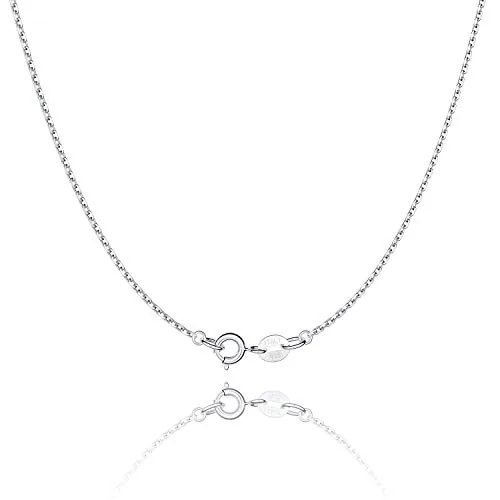
Thin 1.1mm Sterling Silver Cable Chain 18 in
Gold over sterling silver: the base is named on the page, the micron figure is not published
$14.994.5 out of 5

What the range is actually made of
Counted from the catalogue rather than from the marketing: here is the split of the pieces on this site by what the maker states.
| Base metal | Pieces | Share of the range |
|---|---|---|
| 925 sterling silver | 235 | 68% of the range |
| Not stated | 61 | 18% of the range |
| Stainless steel | 49 | 14% of the range |
The pattern is not an accident. Fine chains for the collarbone are silver or gold over silver, because the weight is small and the metal can be soft. The heavier men's chains are steel under their plating, because a 6mm chain in soft metal would deform in a month.
Why the base metal decides the ageing
Two plated chains can look identical in a photograph and behave nothing alike after a year, and the difference is underneath.
Gold over sterling silver ages gracefully: when the plating thins, what shows through is silver, which is a metal people are happy to wear. Gold over steel shows steel, which is greyer and colder but does not corrode. Gold over brass shows brass, which goes green against skin. We do not stock brass-based pieces, and the base is printed so you can tell.
- Gold over sterling silver: wears to silver, softest of the three, easiest to mark
- Gold over stainless steel: wears to grey steel, hardest, best for daily and for water
- Solid sterling silver: no plating to lose, but tarnishes and needs a cloth
The steel-based chains
Heavier links where the base under the plating is stainless steel, and the page says so.
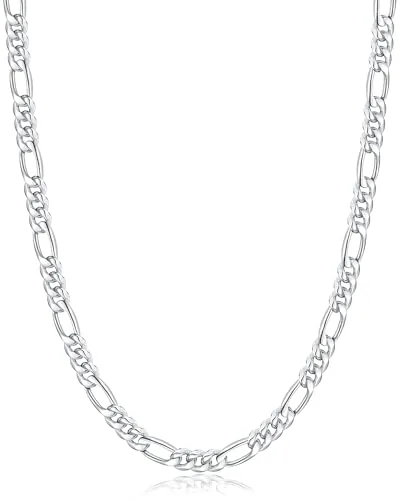

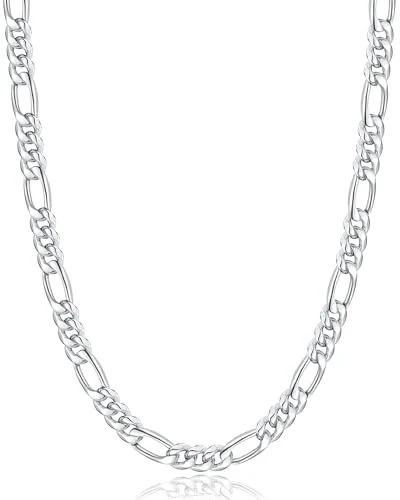
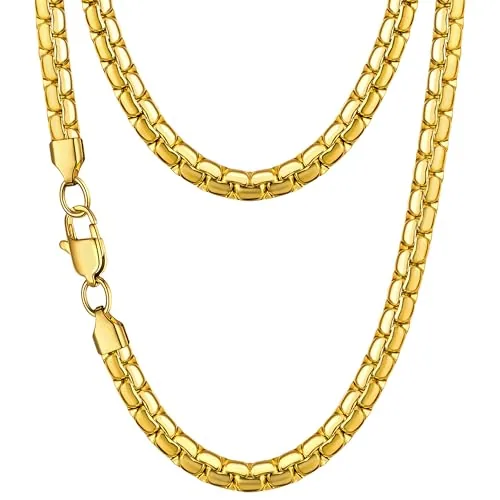
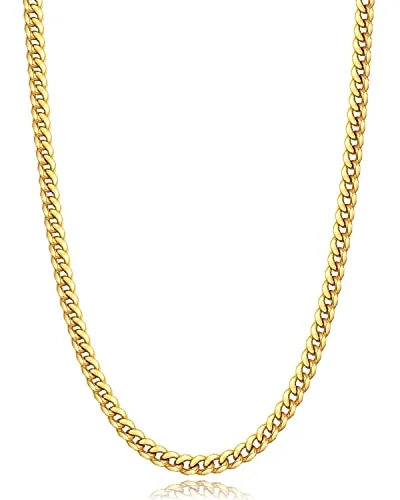
4mm 18K Gold over Steel Cuban Link Chain 18 in
- 18″
- 24″
4mm · 18 in · 18K gold plated over stainless steel
$13.994.2 out of 5
14K and 18K on a plated piece
On a solid gold piece, 14K and 18K describe the whole object: 14 parts gold in 24, or 18 in 24. On a plated piece the same numbers describe only the layer, and the layer is measured in microns rather than in millimetres.
So an 18K gold plated chain is not more gold than a 14K gold plated one in any way you can weigh. It is a slightly warmer, slightly softer colour of gold on the surface. Choose between them by which tone you prefer against your skin, not by which number is bigger.
The word with no legal definition
Hypoallergenic appears on jewellery pages constantly, including some of ours, and in the United States it has no legal definition for jewellery at all. It is a claim, not a specification.
What can be stated factually is what the metal is. Sterling silver, stainless steel and gold are not common contact allergens. Nickel is, and it often sits in the alloys and in the plating layers beneath. Where a maker states nickel-free we print that as their statement. The skin guide goes further into what that means in practice.
Reading any jewellery page in thirty seconds
- Find the metal word. Sterling silver, gold plated, gold-filled, or a tone word that means nothing
- If it is plated, look for the base. No base named is itself information
- Look for a width in millimetres and a length in inches. Absent numbers are absent for a reason
- Look for the clasp. Lobster survives more than spring ring at the same price
- Ignore every adjective. Luxurious, exquisite and premium have no definitions
What we cannot tell you
We cannot tell you the micron thickness of the plating on any piece in this range, because it is not published to us either. We cannot tell you how long a given chain will keep its colour on a given person, because skin chemistry, water and perfume differ more than the plating does.
What we can do is name the metal, print the numbers, and quote the rule that defines the words. The rest of the honesty is in the care guide, where the failures are described rather than promised away.
Sources, read at the page
- Jewelry Guides, 16 CFR Part 23, §23.5 Misrepresentation as to silver content, U.S. Federal Trade Commission (via eCFR). Read 2 September 2026. The same part sets out what may be called vermeil: a sterling silver base plated on all significant surfaces with gold of at least 10 karat fineness, at a minimum thickness of two and one half microns.